The paper summarized here is part of the spring 2026 edition of the Brookings Papers on Economic Activity, the leading conference series and journal in economics for timely, cutting-edge research about real-world policy issues. Research findings are presented in a clear and accessible style to maximize their impact on economic understanding and policymaking. The editors are Brookings Nonresident Senior Fellows Janice Eberly and Jón Steinsson.
See the spring 2026 BPEA event page to watch paper presentations and read summaries of all the papers from this edition. Submit a proposal to present at a future BPEA conference here.
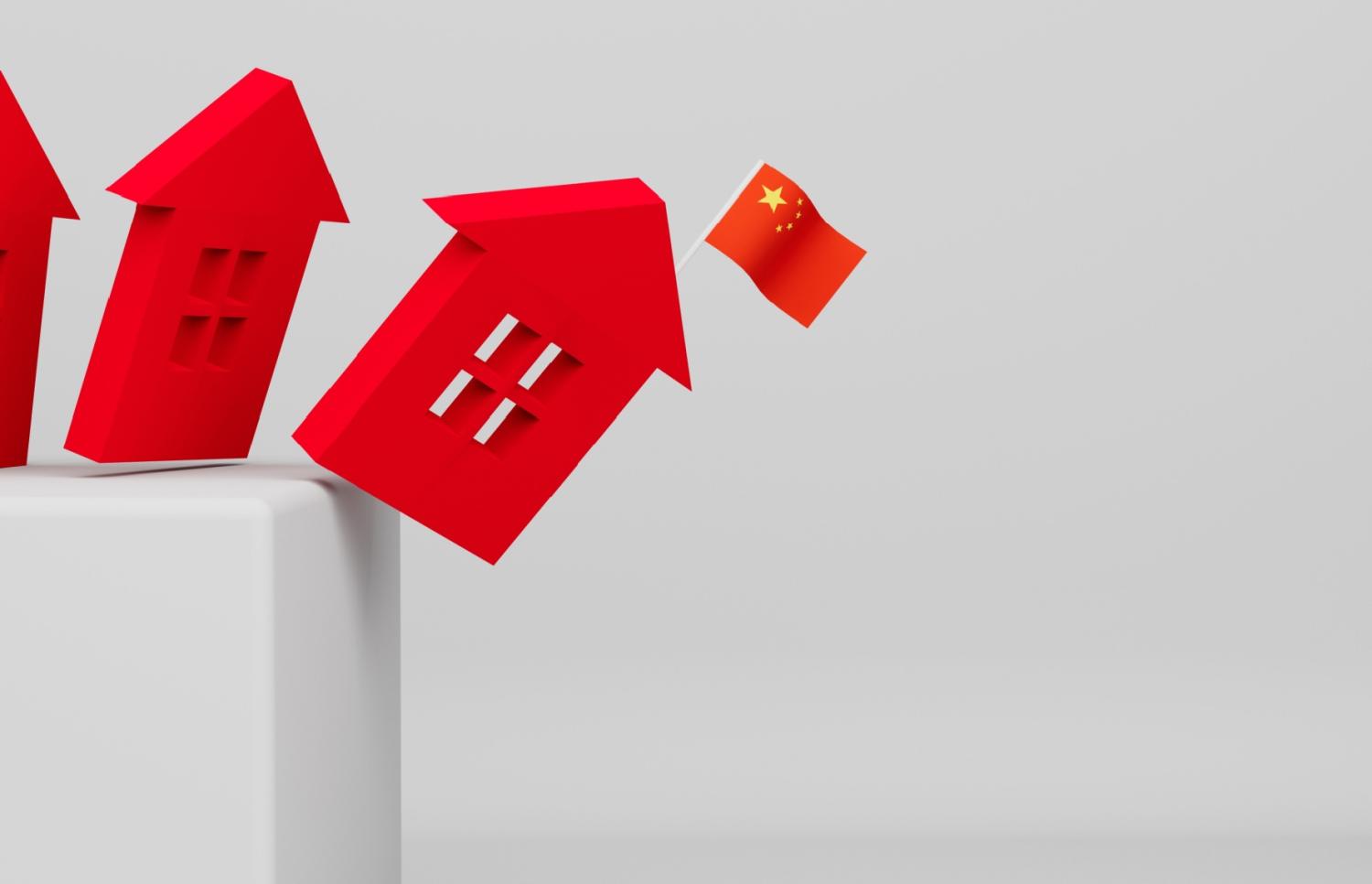
China’s real estate sector—entering its sixth year of adjustment—“appears to be in the middle stages of a multi-year correction,” according to a paper to be discussed at the Brookings Papers on Economic Activity (BPEA) conference on March 27.
The authors, Kenneth Rogoff of Harvard University and Yuanchen Yang of the International Monetary Fund, explore why China’s real estate sector “has exerted such substantial contractionary effects” on its broader economy—the world’s second largest, after the United States’.
And they compare China’s experience so far to the so-called “Lost Decade” of economic stagnation that followed Japan’s real estate collapse in the late 1980s, “uncovering striking parallels …. despite profound institutional differences.” The parallels include demographics (China’s population is aging even faster than Japan’s) and over-development.
“If China’s adjustment unfolds in a similar way as Japan’s, it would mean China has not gone halfway through the transition,” the authors write.
Real estate has long been a cornerstone of China’s economic development and has become even more critical in the context of escalating global tension over China’s voluminous exports, the authors note.
China is the world’s largest trading nation, by volume. However, the authors note that real estate (along with its direct and indirect inputs such as building materials, furniture, utilities) and infrastructure (roads, bridges, water supply and power grids) accounts for nearly one-third of economic demand in China. Plus, Chinese households allocate far more of their wealth to housing (nearly 70%) than households in other countries.

Financial factors such as bank failures and credit crunches are often seen as driving real estate collapses. Indeed, many attribute China’s real estate slowdown to the introduction in August 2020 of China’s ‘three red lines” policy imposing borrowing limits on property developers and the subsequent collapse, in 2021, of China Evergrande Group, once the world’s most valuable real estate companies. However, the authors note, the real estate sector’s contribution to Chinese growth was already declining by 2018.
“Three red lines was a trigger but the real estate slump was going to happen anyway because of the fundamentals—demographics and oversupply,” Rogoff said in an interview with the Brookings Institution.
In explaining the persistence of the downturn, the authors focus on broader real-economy channels related to investment, consumption, and sentiment. Chinese cities where housing was most over-built are experiencing an investment overhang that will suppress new construction for a substantial time, the authors note. Additionally, sharp declines in housing prices have depressed consumption spending and undermined household and firm confidence.
“In the absence of comprehensive social safety nets [in China], housing wealth is a form of precautionary savings; when housing values decline, households tend to scale back spending to offset losses … and … try to build up savings even more,” the authors write.
Authors


CITATION
Rogoff, Kenneth and Yuanchen Yang. 2026. “A Tale of Two Countries: The Real Estate Crises in 1990s Japan and Contemporary China.” BPEA Conference Draft, Spring.
-
Acknowledgements and disclosures
David Skidmore authored the summary language for this paper. Chris Miller assisted with data visualization.
The views expressed herein are those of the authors and should not be attributed to the IMF, its Executive Board, or its management.
The Brookings Institution is committed to quality, independence, and impact.
We are supported by a diverse array of funders. In line with our values and policies, each Brookings publication represents the sole views of its author(s).