Series: Meet the Press at Brookings | Number 6 of 7 « Previous | Next »

Feb 8

Past Event

Meet the Press at Brookings: The Egypt Revolution One Year On

Event Materials

Video

Highlights

  • Egypt's Stakeholders See U.S. in Myriad Ways

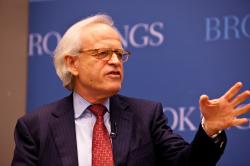
    Martin Indyk: The Egyptian military, the Egyptian people and the Muslim Brotherhood all view the U.S. differently, and they all want different things from the American government.

  • Has the U.S. Supported Its Allies?

    Full panel debate: Has the U.S. consistently supported its friends and allies in the region?

    Martin S. Indyk, Tamara Cofman Wittes and Thomas Wright

  • Egyptian People Suspicious of U.S. Intentions

    Robin Wright, United States Institute of Peace: Egyptians are suspicious of U.S. intentions for their country and this is the time for our government to stand back and let the Egyptian people chart their own course.

  • Defining What Egypt Wants

    Tamara Wittes, Fmr Deputy Assistant Secretary, U.S. Department of State: As the Egyptian people think about their future, it appears that they know what they don’t want; but they don’t know what they do want.

Full Event

The Egypt Revolution One Year On

The following is a full video archive: On February 8, Foreign Policy at Brookings and NBC’s Meet the Press hosted a panel discussion to assess the implications of the Egyptian revolution at its first anniversary.

Martin S. Indyk, Tamara Cofman Wittes and Thomas Wright

Summary

One year ago, a wave of revolutionary change swept across the Middle East and North Africa. The political protests in Cairo captured the world’s attention as Egyptians took to Tahrir Square to call for President Hosni Mubarak’s resignation. On February 11, Mubarak stepped down after nearly 30 years in power. Now, one year later, democratic elections have given Islamists a majority in the Egyptian Parliament. But that is only the beginning of the political process: constitutional changes will have to be debated and decided; the division of power among Parliament, the presidency, and the military will have to be resolved; and the Egyptian economy will have to be put back on a growth trajectory.

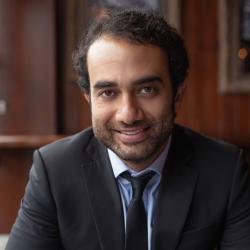
On February 8, Foreign Policy at Brookings and NBC’s Meet the Press hosted a panel discussion to assess the implications of the Egyptian revolution at its first anniversary. David Gregory, host of NBC’s Meet the Press, moderated the session, part of a series of discussions on foreign policy issues. Panelists included Robin Wright, author of Rock the Casbah: Rage and Rebellion across the Islamic World (Simon & Schuster, 2011) and joint fellow at the United States Institute of Peace and the Woodrow Wilson International Center for Scholars; Martin Indyk, vice president and director of Foreign Policy at Brookings; Tamara Wittes, former deputy assistant secretary of state for Near Eastern affairs, who was responsible for U.S. democracy promotion in the Middle East; and Shadi Hamid, fellow and director of research of the Brookings Doha Center, who appeared live from Doha via video feed. Hamid and Indyk have recently returned from Egypt.

After the program, the panelists took audience questions.

Details

February 8, 2012

2:00 PM - 3:00 PM EST

The Brookings Institution

Falk Auditorium

1775 Massachusetts Ave., NW

Map

For More Information

Brookings Office of Communications

(202) 797-6105

Event Agenda

  • Moderator

    • David Gregory

      Anchor, Meet the Press

      NBC News

  • Panelists

    • Shadi Hamid

      Director of Research

      Foreign Policy

    • Portrait: Martin Indyk

      Martin S. Indyk

      Vice President and Director

      Foreign Policy

    • Tamara Wittes

      Former Deputy Assistant Secretary of State for Near Eastern Affairs

      U.S. Department of State

    • Robin Wright

      Joint Fellow

      United States Institute of Peace and the Woodrow Wilson International Center for Scholars

SERIES: Meet the Press at Brookings | Number 6