Topics View All
Geography View All
Research Activities View All
Trending:
Past Event
Remarks by Secretary Geithner (Uncorrected)
53 KB
Remarks by Alan Greenspan (Uncorrected)
71 KB
Share
Download Media
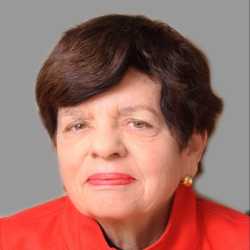
Alice Rivlin: Clearly, housing policies need to be amended, but it’s critical that we factor in how changing these policies will affect the nation’s future.
Alice M. Rivlin, Martin Neil Baily, Douglas J. Elliott, Karen Dynan, Ted Gayer and Robert C. Pozen
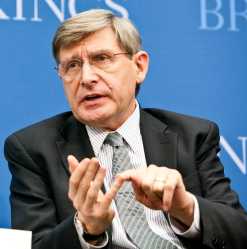
Karen Dynan: The economic recovery is impaired by the sluggish housing market, so we need to commit to a new lending system that will shore up the market and aid the recovery, as well.
Karen Dynan
Dwight Jaffe, University of California, Berkeley: My whole question is with government insurance--and I think a market with very little government intervention works just fine.
Christopher Mayer, Columbia University: There is no evidence that the mortgage crisis was brought on by bad products; it was the underwriting that was questionable.
S. Wayne Passmore, Federal Reserve Board of Governors: We think there are some clear advantages with government–provided catastrophic insurance for mortgage-backed instruments.
Edward Pinto, American Enterprise Institute: We’ve come full circle. Today’s call for more conservative regulation will take us right back to where we were in 1989.
Timothy Geithner, Secretary of the Treasury: Reforming federal housing policies is a complex matter that will take deliberation and time; but it’s clear that replacing the role of Fannie Mae and Freddie Mac will be an integral part of the process.
Timothy Geithner, Secretary of the Treasury: Government efforts to help provide affordable housing and create home ownership incentives played a part in creating the housing crisis but, there were other factors, as well.
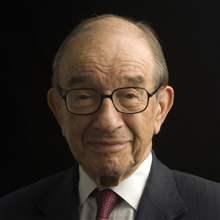
Alan Greenspan, Greenspan Associates: It’s hard to say what the housing market would look like without government intervention. We know interest rates would be higher and the size of the market would be smaller, but would that be a bad thing?
Right-click (ctl+click for Mac) on 'Download' and select 'save link as..'
Copy and paste the embed code above to your website or blog.
Brookings Multimedia content requires JavaScript. Your browser either doesn't have JavaScript or doesn't have it enabled.
Instructions to enable JavaScript.
There is wide bipartisan agreement that government housing policies, past and present, need to be re-evaluated given their role in the financial crisis. While the reform of Fannie Mae and Freddie Mac was not included in financial reform legislation last year, the Obama administration and congressional leaders are vowing action on these government-sponsored enterprises (GSEs) this year. Will the new majority in the House of Representatives wind down the housing giants and if so, how fast? Can the already weak housing market survive without some kind of an explicit government back-stop? Can consensus be reached? Read more about the Obama administration's plan for reforming the U.S. housing market »View archived video at C-SPAN.com »
On February 11, the Initiative on Business and Public Policy at Brookings hosted a day-long forum to discuss the issues and the options ahead as policymakers discuss the government's role in the U.S. residential mortgage market. Secretary Timothy Geithner remarked on the administration's strategy for reforming the nation's housing finance markets. Former Federal Reserve Chairman Alan Greenspan delivered the keynote address. Four papers written by experts in the housing market and finance field were released and discussed, and two panels tackled the broader issues the papers raise.Selected papers and presentations are available below, all in PDF format.Papers
February 11, 2011
9:30 AM - 5:00 PM EST
The Brookings Institution
Falk Auditorium
1775 Massachusetts Ave., NW
Washington, DC
Map
Brookings Office of Communications events [at] brookings.edu (202) 797-6105
9:30 AM -- Welcome
Martin Neil Baily
Senior Fellow
Economic Studies
View Bio
Reforming the Mortgage Market
The Honorable Timothy Geithner
U.S. Secretary of the Treasury
10:00 AM -- Panel One: GSEs - Options and Issues
Douglas J. Elliott
Fellow
Edward Pinto
Resident Fellow
American Enterprise Institute
Alice M. Rivlin
10:25 AM -- Presentation One: Catastrophic Mortgage Insurance and the Reform of Fannie Mae and Freddie Mac
Co-Author: Diana Hancock
Deputy Associate Director, Division of Research and Statistics
Federal Reserve Board of Governors
Co-Author: S. Wayne Passmore
Associate Director, Division of Research and Statistics
Discussant: Christopher Mayer
Paul Milstein Professor of Real Estate
Columbia University
Discussant: John Quigley
I. Donald Terner Distinguished Professor and Professor of Economics
University of California, Berkeley
11:15 AM -- Presentation Two: Government’s Role in the Housing Finance System: Where Do We Go From Here?
Discussant: Dwight Jaffee
Willis Booth Professor of Banking, Finance, and Real Estate
Co-Chair, Fisher Center for Real Estate and Urban Economics, University of California, Berkeley
Discussant: Richard Herring
Jacob Safra Professor of International Banking and Co-Director, Wharton Financial Institutions Center
University of Pennsylvania
12:15 PM -- Keynote Address
Alan Greenspan
President
Greenspan Associates
1:30 PM -- Presentation Three: The Economics of Housing Finance Reform: Privatizing, Regulating and Backstopping the Mortgage Market
Co-Author: David Scharfstein
Edmund Cogswell Converse Professor of Finance and Banking
Harvard Business School
Co-Author: Adi Sunderam
Harvard University
Discussants: Viral Acharya
Professor of Finance, Leonard N. Stern School of Business
New York University
Discussant: Donald Marron
Director
Urban-Brookings Tax Policy Center
2:20 PM -- Presentation Four: Toward a Three-Tiered Market for U.S. Home Mortgages
Discussant: Michael Fratantoni
Vice President of Research
Mortgage Bankers Association
Discussant: Lawrence J. White
Professor of Economics, Stern School of Business
3:20 PM -- Presentation Five: Eliminating the GSEs as Part of Comprehensive Housing Finance Reform
Author: Peter Wallison
Arthur F. Burns Fellow in Financial Policy Studies
Discussant: Phillip Swagel
Visiting Professor of Finance and Director of the Center for Financial Institutions, Policy, and Governance
Georgetown University McDonough School of Business
Discussant: Sarah Rosen Wartell
Executive Vice President
Center for American Progress
4:10 PM -- Panel Two: GSEs - What Have We Learned?
May 23, 2012
Blog Post
May 22, 2012, George L. Perry
Opinion
May 22, 2012, Gary Burtless
Paper
May 20, 2012, Martin Neil Baily and Bruce Katz
May 17, 2012, Ted Gayer and Phillip Swagel
May 17, 2012, Tracy Gordon
Testimony
May 16, 2012, Douglas J. Elliott
May 15, 2012, George L. Perry
Economic Studies ›
February 9, 2011, Karen Dynan and Ted Gayer
February 12, 2012, Karen Dynan, Ted Gayer and Darrell M. West
August 7, 2011, Ted Gayer and Darrell M. West
March 7, 2012, Karen Dynan
March 22, 2012, Karen Dynan
October 6, 2011, Martin Neil Baily
March 7, 2012, Martin Neil Baily
March 16, 2011, Karen Dynan